Brisbane homes are adding batteries because solar alone can’t always solve the mismatch between when power is generated and when it’s used. Power bills across Brisbane keep climbing, and homeowners want to know why solar isn’t cutting their bills anymore.
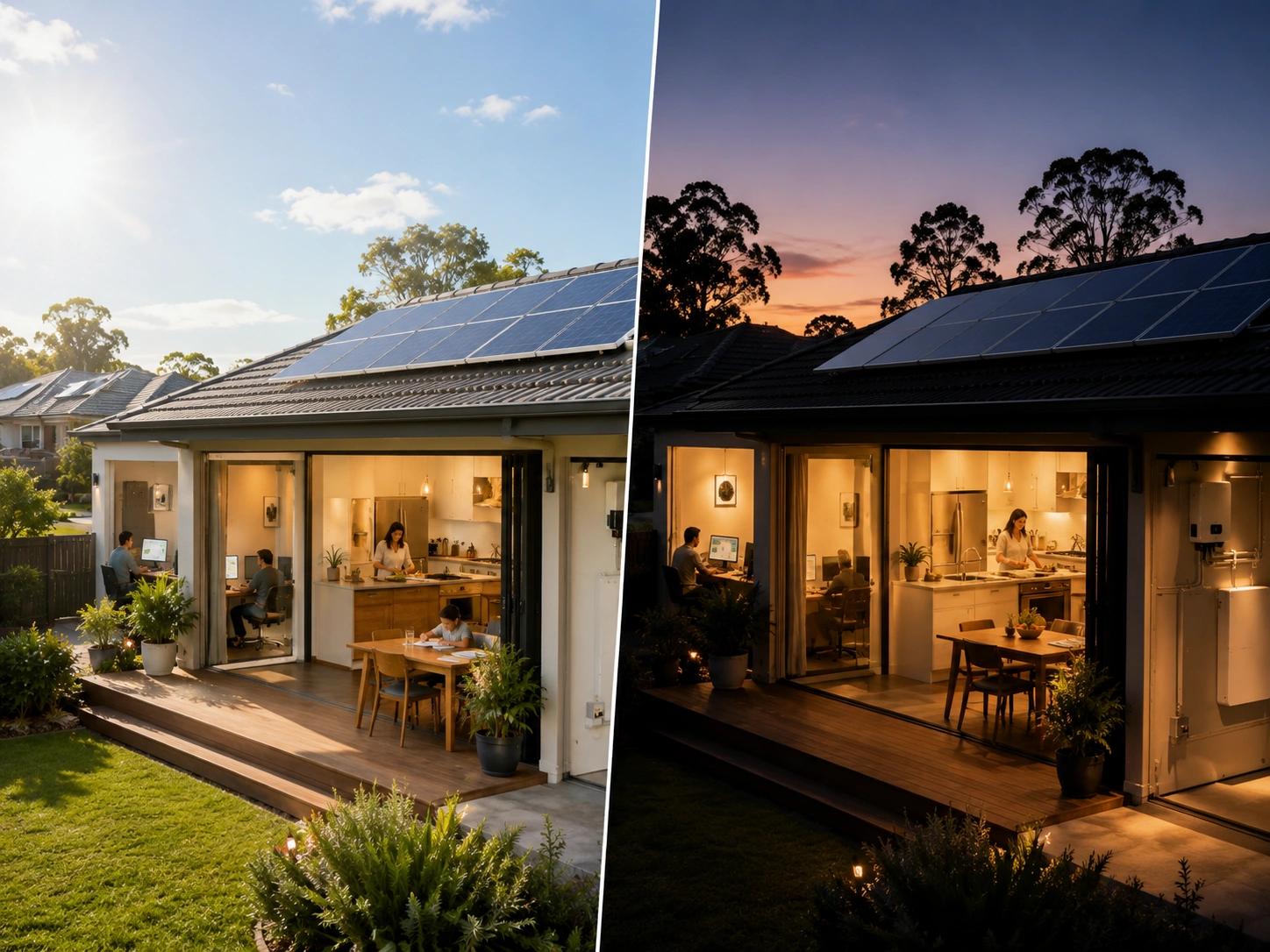
The answer comes down to timing. Solar generates power during the day when nobody’s home, then the household draws expensive grid electricity at night. A solar and battery system helps close that gap by storing excess daytime energy for later use.
In this article, we’ll go through how much battery storage costs and how these systems connect to your existing solar setup. We’ll also cover which rebates can bring the upfront price down.
Keep reading to understand what your solar system needs next.
What’s Driving the Rush to Home Battery Storage in Brisbane?
Rising electricity tariffs and unpredictable power bills are driving Brisbane homeowners toward battery storage. We’ve had more Brisbane clients ask about this in the last six months than in the previous two years combined.
Here’s a closer look at what’s behind the shift, and why homeowners are acting on it now:
Why Are Electricity Tariffs Pushing Brisbane Homes Toward Batteries?
Electricity tariffs have shifted to peak and off-peak pricing structures across Queensland. So homes without storage pay full price during expensive peak evening hours, usually between 4 pm and 8 pm. That’s when most households are cooking dinner and running the aircon.
Battery storage allows households to use solar power stored earlier in the day. Once that stored energy is available, homeowners can rely less on the grid during peak pricing periods. Instead, they use power generated by their own system.
Honestly, this shift in electricity tariffs isn’t going away anytime soon. Energy retailers have leaned further into time-of-use pricing over the past few years. So, locking in battery storage now gets ahead of that curve.
Solar Battery Brisbane Demand: What’s Changed in the Last Year?
Installer enquiries for solar battery systems in Brisbane have risen noticeably this year. Rising grid electricity costs are the main driver behind this shift. One Chermside homeowner told us their quarterly bill jumped by over $200 before they added storage.
Because of this, more homeowners are pairing new solar systems with battery storage during day one. From what we’ve seen on the tools, this is now the default request rather than an exception. Many clients now ask about batteries alongside solar panels.
This trend says something about where energy prices are headed. Households have stopped waiting to see if bills settle down. And storage is going into the plan at the beginning.
Solar Battery Cost: What’s the Real Investment?
Solar battery cost varies widely depending on capacity and brand. That’s why the cheapest option isn’t always the smartest one.
So where does all that price variation come from? Let’s break it down:
How Much Does a Solar Battery Brisbane System Cost?
Battery capacity, measured in kWh (kilowatt-hours), is the major cost driver for any system. Installation requirements and hybrid inverter compatibility can also increase the total quoted price. Moreover, older solar systems sometimes need extra wiring work, which bumps up the final invoice.
Brisbane pricing typically sits within a broad range depending on battery brands and storage capacity. The right size depends on your household’s energy usage. A smaller system may suit low-energy households, while larger homes with higher usage often need more storage to handle greater power demands.
Useful Tip: Before signing anything, ask for that cost breakdown in writing before signing anything. Some quotes bundle installation and hardware together without listing each cost separately. A clear split makes it easier to compare across installers.
What’s the Payback Period on a Battery Backup System?
The payback period depends on household energy usage, electricity tariffs, rebates, and virtual power plant participation (where you can be paid for sharing your battery’s stored power). These factors can reduce the time it takes to recover your investment.
For most Brisbane households, the return period falls somewhere between six and 10 years. Homes with higher solar self-consumption often recover that investment sooner because they rely less on expensive grid electricity.
Once the system reaches its payback point, the savings continue to build. From then on, the battery keeps reducing your electricity costs and delivers ongoing value over its lifespan.
Solar and Battery System: How It All Works Together

The best part about understanding how these systems connect is knowing exactly what you’re paying for. This section covers how solar panels, inverters, and batteries link up.
We’ve walked plenty of Brisbane homeowners through this exact setup, and the confusion usually starts right here:
Separate Battery Inverter vs. AC Coupling: What’s the Difference?
A separate battery inverter runs independently out of the main solar inverter. AC coupling connects the battery through the existing solar inverter setup instead. This route tends to suit homes retrofitting a battery onto solar panels they’ve already had for years.
Hybrid solar inverters take a different approach. They manage both solar production and battery charging through one unit rather than two (new installations often go this way since it simplifies the wiring during day one).
The choice ultimately depends on when you’re adding the battery. Retrofitting battery storage later often costs more, so choosing the right inverter from the beginning can help avoid unnecessary upgrades.
How Large Battery Does Your Brisbane Home Need?
Battery storage capacity varies by model, and the usable capacity is usually a little lower than the advertised figure. Most battery technology reserves this small buffer to protect the cells.
At the same time, daily energy usage determines how far that stored power stretches. For example, a family running ducted aircon in a Brisbane heatwave chews through preserved power fast. But a couple in a unit with lower energy usage gets by on a smaller system.
So naturally, getting the size right means matching capacity to how much power your home uses. Too small, and you’re back on grid electricity by evening. Oversize it, and you’ve paid for storage capacity you’ll rarely touch.
Rebates, VPPs, and Getting the Best Deal
Not every energy company offers the same feed-in tariffs. And some retailers pay well below others for the same exported power. That’s why it’s worth comparing feed-in rates before locking in a plan.
Now, let’s explore the incentives that can lower your upfront costs and increase your savings over time.
Solar Rebate and Federal Rebate: What’s Available Right Now?

The federal battery rebate is a government subsidy that cuts the upfront cost of eligible systems. It works alongside small-scale technology certificates, credits based on expected energy output, which lower the price further. Most installers factor both into the quote.
The following table gives a quick breakdown of what’s currently on offer for Brisbane households:
| Rebate | What It Covers | Who’s Eligible |
| Federal Battery Rebate | Reduces upfront battery cost | Homeowners with eligible battery systems |
| Small Scale Technology Certificates | Lowers price based on system size | Installations under the certificate threshold |
| Cheaper Home Batteries Program | Stacks with federal rebate in some cases | Queensland households meeting program criteria |
Don’t forget to always double-check accreditation status before signing anything. Look for Clean Energy Council accreditation on any installer you’re considering. Skip this step, and you risk losing the battery rebate entirely.
What Is a Virtual Power Plant and Should You Join One?
A virtual power plant (VPP) lets your battery feed stored power back to the grid when needed. A VPP can earn you bill credits or upfront payments from your electricity retailer. However, not every battery model is VPP-compatible, so check that first.
Once confirmed, joining is a fairly simple next step. Most providers handle the technical setup remotely. You keep blackout protection since some stored energy stays reserved for your home.
What’s more, a VPP also supports energy independence beyond bill savings. Your excess solar gets put to use instead of sitting idle. That beats exporting it for a few cents per kilowatt hour.
Ready to Stop Guessing and Start Saving?
We’ve covered what these systems cost, how they connect to your existing solar setup, and which rebates bring the price down. Between the federal battery rebate and Queensland’s own programs, there’s real money on the table right now.
Our honest suggestion? Compare a few offers from different installers before committing to any single battery brand. Ask for accreditation details and a full cost breakdown in writing. That one step alone saves most homeowners from an expensive mismatch.
Ready to see what a solar and battery system could save you? Get a personalised quote from My Solar Power Brisbane today.