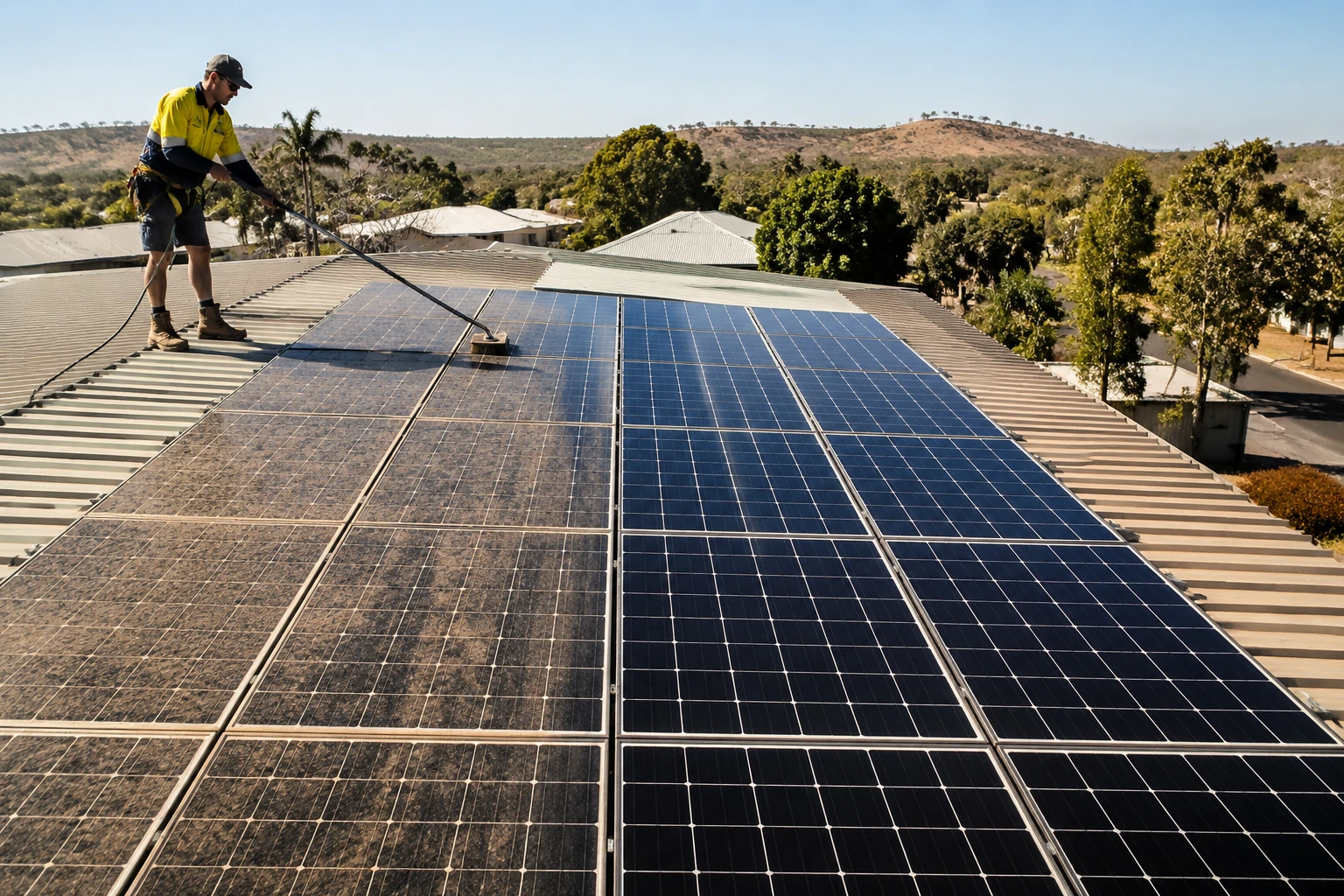
A layer of dust, pollen or bird droppings on your solar panels probably doesn’t seem like a big deal. Most homeowners assume rain washes it away, or that a bit of grime barely affects performance.
But Queensland weather rarely lets that assumption hold up. That’s because the state’s climate combines long dry spells, coastal salt, high humidity and seasonal pollen, which leave residue on panels. Rain helps, but it often isn’t enough to remove everything.
This article explores the hidden costs of dirty solar panels in Queensland. You’ll also learn how often to clean them and how to keep your system performing at its best.
Let’s get into it.
One Dirty Panel Can Pull Down Your Entire System
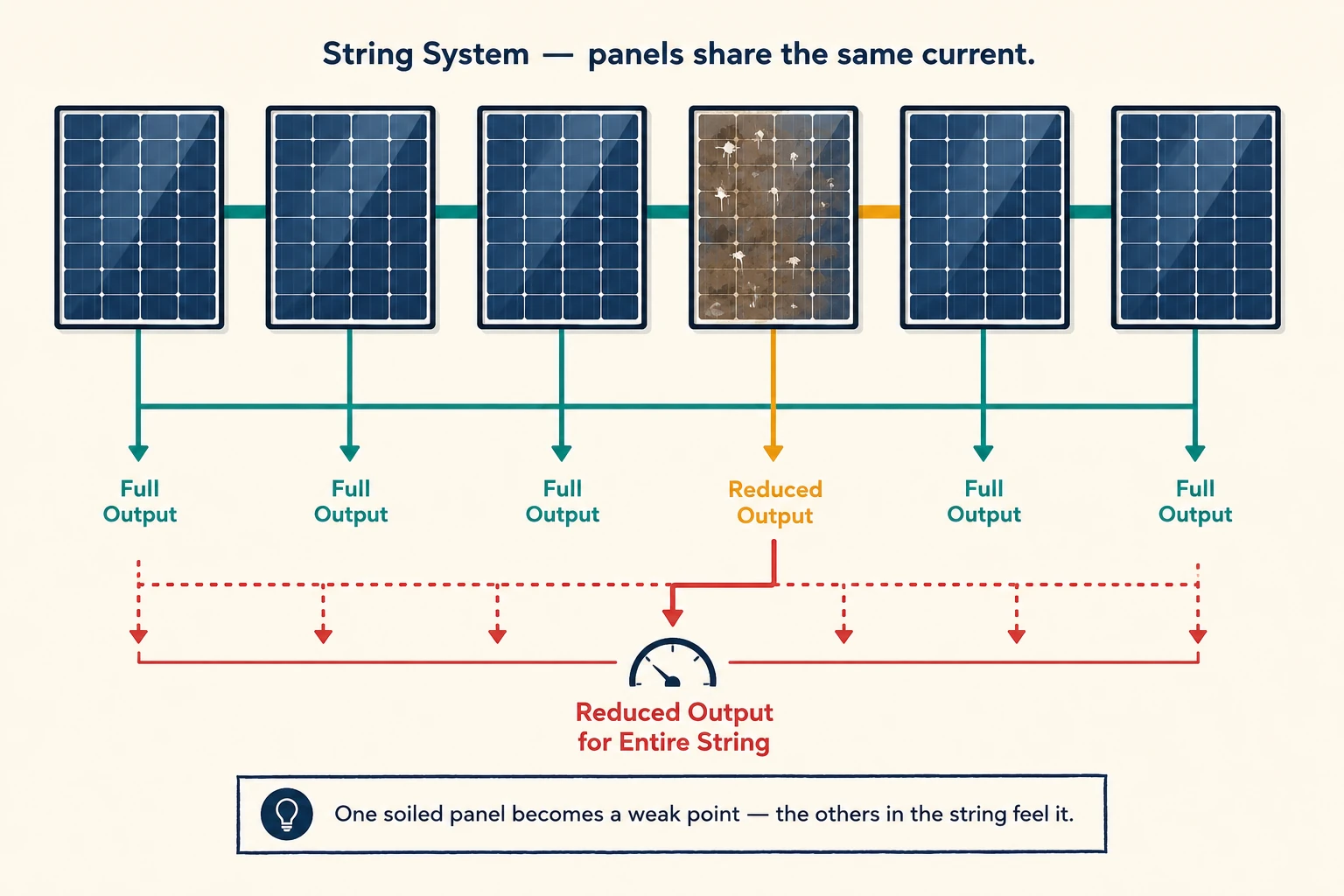
Most rooftop solar systems connect panels together in strings rather than having each one work independently. In a string system, they share the same current. If one panel’s output drops because of heavy soiling, it can reduce the performance of the others in that string.
The problem is that they rarely get dirty evenly. In Queensland, dust, pollen, bird droppings, coastal salt and bushfire ash often collect more heavily on one part of the roof than another. That creates a weak point in the string.
For homeowners, that means a small patch of grime can end up having a much bigger impact than expected. And in most cases, you’d never know it was happening just by looking at your power bill.
The Loss Happens So Gradually You Don’t Notice
Picture this: your quarterly bill goes up a little. You put it down to a rate increase or a hot summer. Meanwhile, your panels are generating less power than they should, and nothing on your bill tells you why.
That’s what makes the problem so easy to overlook. Dirt builds up gradually, and the drop in generation happens the same way. Instead of one obvious spike in your electricity bill, you lose a little more solar energy over time.
The easiest way to spot the problem is through your monitoring app. Comparing your system’s output against previous months can reveal a gradual decline long before it’s obvious from your power bills alone.
Waiting Longer Makes Solar Panel Cleaning More Expensive
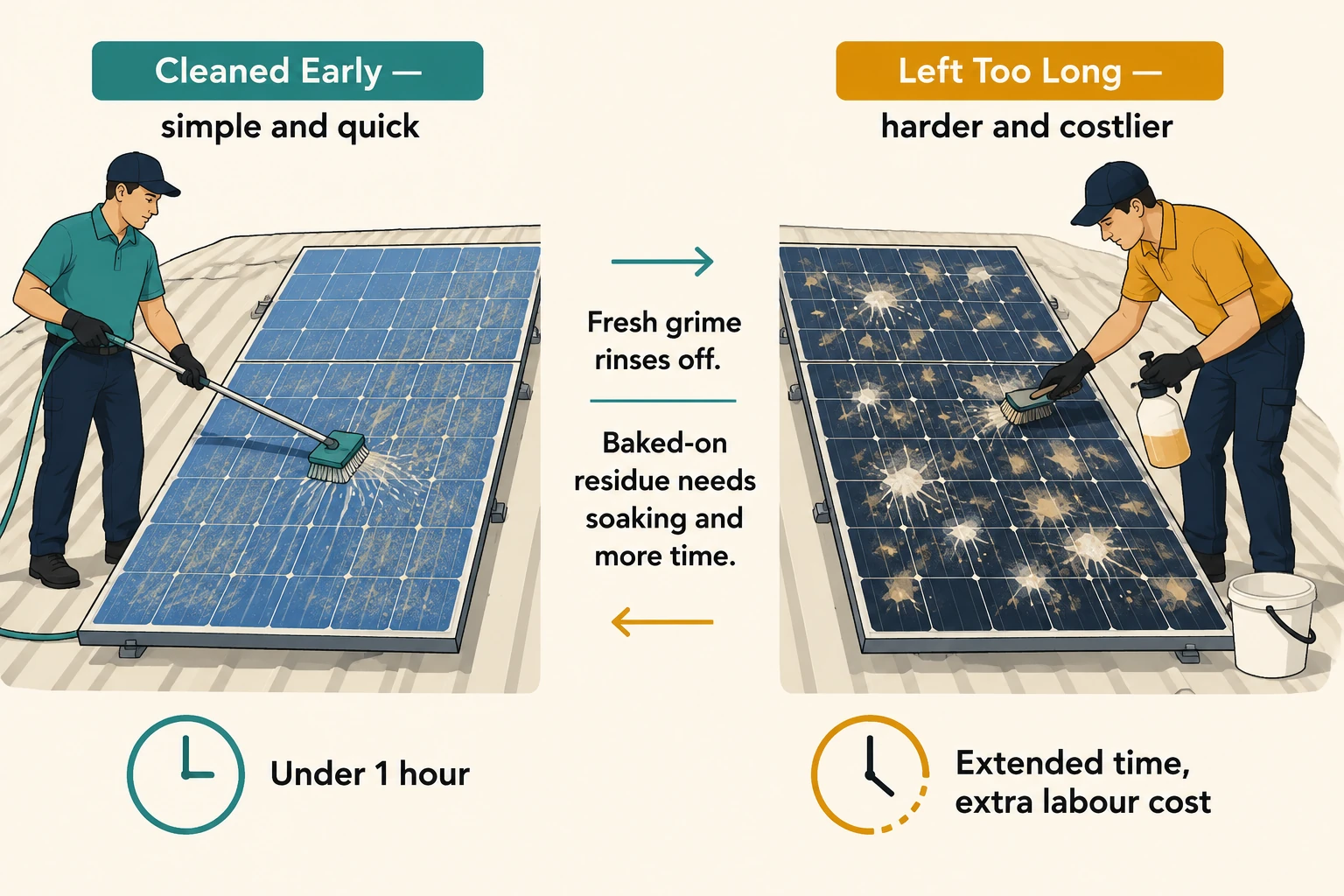
Cleaning is much simpler when done early. A technician rinses the glass, works through any loose debris with a soft brush, and the job is often finished in under an hour. But when panel cleaning gets pushed back month after month, the clean itself becomes more expensive.
Bird droppings are a good example. Fresh droppings are usually easy to remove. However, if you leave them baking on the panels through weeks of sun and rain, they harden into a stubborn residue.
At that point, a quick rinse is no longer enough. The technician may need to soak the area with a specialised solution and take more time to remove the residue without damaging the glass. That extra labour is what pushes up the cost of the clean.
That’s why cleaning the panels before grime hardens is usually the simpler and more cost-effective option.
Your Solar Payback Period Gets Longer
One of the main reasons homeowners install solar is to reduce their electricity bills and recover the upfront cost over time. The more electricity your system generates, the sooner those savings cover your initial investment. This is known as your solar payback period.
Dirty panels slow that process down. When they generate less electricity than they should, you save less on your power bills each month. Those smaller savings might not seem significant each month. But over time, they can noticeably extend your solar payback period.
The exact impact varies from one home to another. Your system size, electricity usage, feed-in tariff and how long the panels have been underperforming all affect the final number.
You can use the SunSPOT calculator (free and takes about two minutes) to estimate your system’s expected performance based on your location and installation details.
How Often Should You Clean Solar Panels in Queensland?
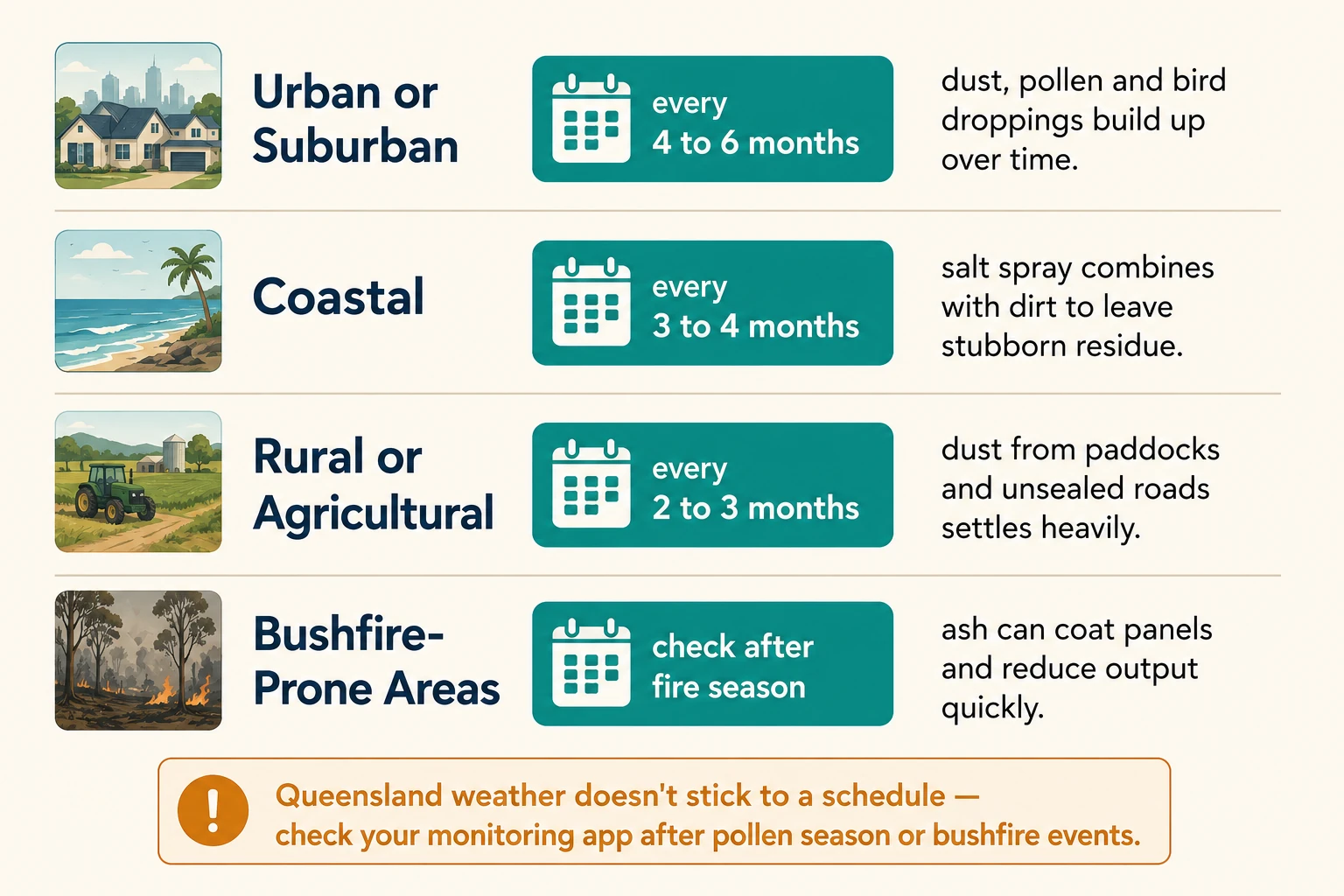
From our experience, most Queensland homes get the best results by cleaning their solar panels every three to six months. The right frequency depends on where you live and the conditions around your home. The table below provides a general guide.
| Location | Recommended Cleaning Frequency | Why |
| Urban or suburban | Every 4 to 6 months | Dust, pollen and bird droppings build up over time |
| Coastal | Every 3 to 4 months | Salt spray combines with dirt to leave stubborn residue |
| Rural or agricultural | Every 2 to 3 months | Dust from paddocks and unsealed roads settles heavily on panels |
| Bushfire-prone areas | Check after fire season | Ash can coat panels and reduce output |
The table provides a good starting point, but Queensland’s weather doesn’t always stick to a schedule. Pollen season and the weeks after a bushfire event are good times to check your system, even if your next clean isn’t due yet. A quick look at your monitoring app can help you decide whether it’s time to bring your next clean forward.
Don’t Let Dirty Panels Eat Into Your Solar Savings
Dirt builds up gradually, and so do the costs that come with it. Over time, they can reduce your system’s performance and eat into the savings that made solar worthwhile in the first place. Luckily, regular cleaning helps keep your system working as intended.
If you’d like a professional solar panel clean or a system health check, My Solar Power Brisbane can inspect your system and recommend the right next step. Contact us through our website or email [email protected] to book an inspection.
Frequently Asked Questions
Every solar system is a little different, so it’s normal to have a few questions about cleaning and maintenance. Here are answers to some of the questions we’re asked most often.
Can I clean my solar panels myself?
Yes, but carefully. A soft brush and mild dishwashing liquid with warm water is usually enough. Avoid harsh chemicals as they can damage the glass and affect solar panel efficiency. For anything above ground level, contact a licensed electrician or accredited installer rather than climbing up yourself.
Does shade affect solar output the same way dirt does?
Not exactly. A soft brush and mild dishwashing liquid with warm water is usually enough. Avoid harsh chemicals as they can damage the glass and affect efficiency. For anything above ground level, contact a licensed electrician or accredited installer rather than climbing up yourself.
How do I know if my inverter is showing a problem?
Check your monitoring app or your inverter’s live output reading. A noticeable drop in output without an obvious cause, such as prolonged cloud cover, is a good reason to inspect your panels.
Will cleaning my panels affect their warranty?
Not if it’s done correctly. However, using the wrong cleaning methods or damaging the panels during cleaning could affect your warranty. Avoid harsh chemicals, abrasive materials and high-pressure washers. If you’re not sure what your manufacturer recommends, check your warranty documents or contact your installer.
Can a battery system offset the loss from dirty panels?
No. A battery doesn’t increase the amount of electricity your panels generate. It simply stores excess energy for later use. If dirty panels are producing less power, the battery will have less energy to store. Regularly cleaning them is still the best way to maintain your system’s performance.